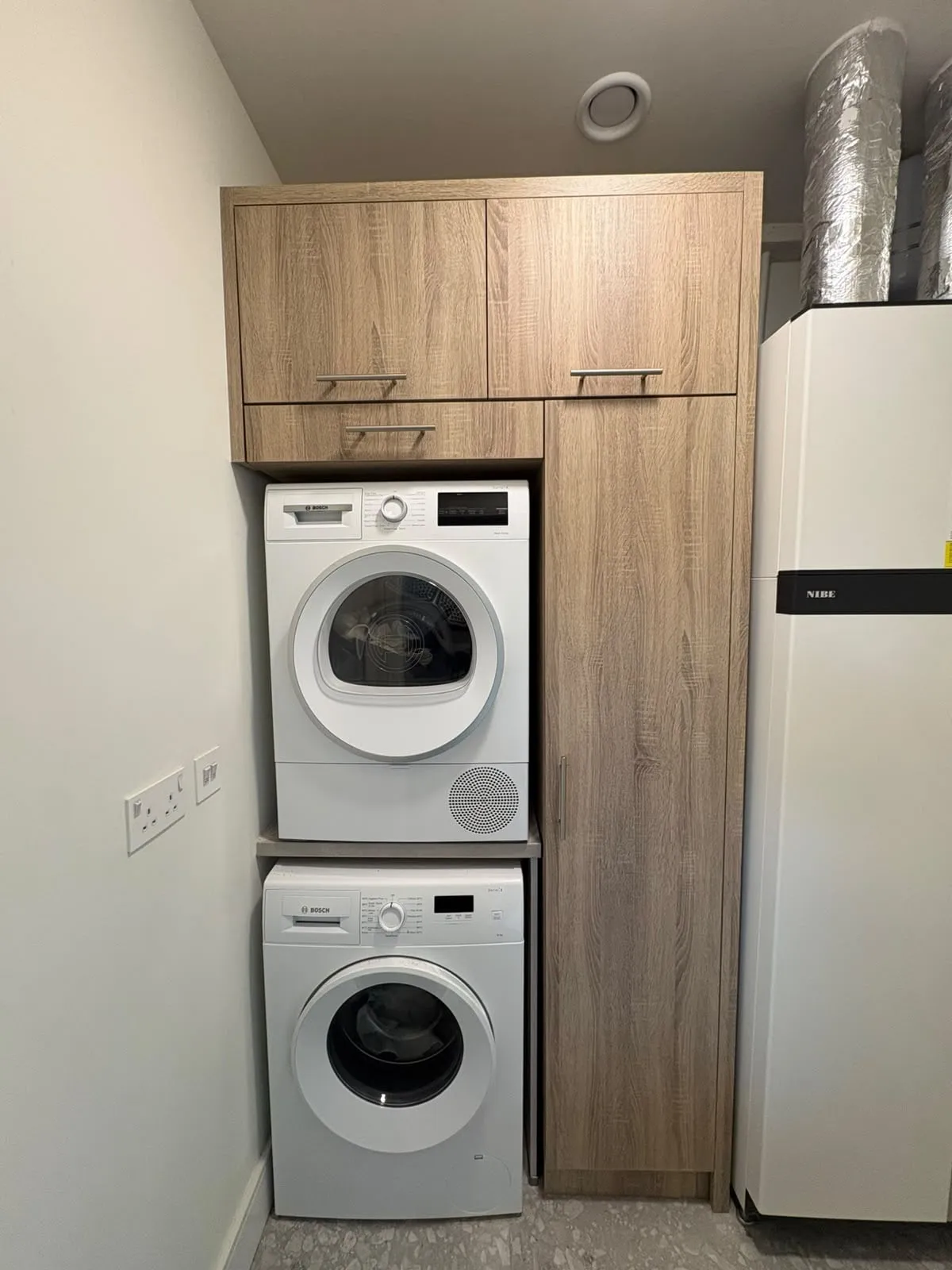
Many newer Irish homes and apartments have a compact utility room or laundry cupboard that also houses a hot-water cylinder or heat pump unit. Stacking the washing machine and dryer is the most space-efficient answer, and a made-to-measure cabinet around them turns a cramped corner into proper storage.
Stack the machines safely
Only stack machines that are designed to be stacked, with the dryer on top of the washer. Most manufacturers sell a stacking kit for their models, often with a pull-out shelf for a laundry basket. A shelf or frame built into the cabinet can also carry the dryer, but it must be strong, level and fixed so vibration from the spin cycle cannot move it.
Check the combined height of the machines against the ceiling and any pipes or ducts, and leave space above the dryer to load it and empty the filters.
Leave room to breathe
Dryers — especially heat-pump and condenser models — need airflow. Keep the gaps the manufacturer asks for around the sides and back, and don’t box the machines in with tight doors unless the doors are ventilated. Where the room also has a heat pump, cylinder or ventilation unit, keep its service panels clear; engineers need to reach them.
Plan the storage around the machines
A practical layout usually includes:
- A tall cupboard beside the machines for the ironing board, mop, vacuum cleaner and cleaning products.
- Cabinets or a drawer above the dryer for detergent and spare towels.
- A worktop or pull-out shelf for folding and sorting.
- Hanging space for drying clothes, if the room allows.
In the photo, a tall wood-effect cupboard runs beside the machines, with cabinets and a drawer above that use every centimetre up to the ceiling.
Finishes that cope with laundry
Utility rooms see moisture, heat and knocks. Melamine-faced boards in woodgrain or plain colours are hard-wearing and easy to wipe clean, and moisture-resistant boards are a good idea near sinks. Edges should be sealed and the bottom of tall units kept clear of water from the machines.
Access for plumbing and electrics
Keep the water valves, waste pipe and sockets reachable without pulling out the machines. A removable panel or an open section behind the washer makes future repairs much easier. Any change to sockets or circuits should be carried out by a registered electrician.
Getting it made
Made-to-measure utility units are built to the exact space, so they fit tight corners and unusual ceiling heights. See our made-to-measure cabinets page or send a photo of the room, the machine models and rough measurements for a quotation. Moving into a new home? Our new-build checklist covers what to plan first.